In our How to Sign Up for UCSS VPN: Registration and Setup Guide, we covered how to create a UCSS account and get started.
If you haven't signed up yet, you can do so at the UCSS Official Website.
In this guide, we'll show you how to set up and use UCSS on your iPhone or iPad, including:
- How to download and set up the UCSS app
- How to use the UCSS app and connect to a VPN server
We'll walk you through each step with screenshots so you can easily follow along.
How to Set Up the UCSS VPN App on iPhone and iPad
Step 1: Download and Install the UCSS App on iPhone or iPad
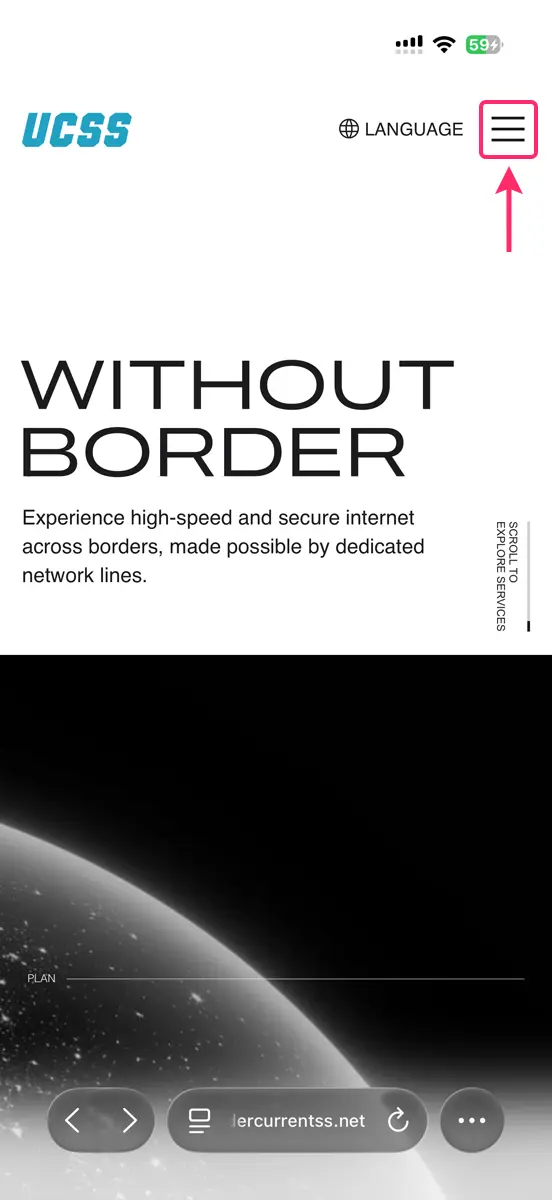
First, go to the UCSS Official Website and tap the menu button in the top-right corner of the screen.
You can change the website language from the “LANGUAGE” menu.
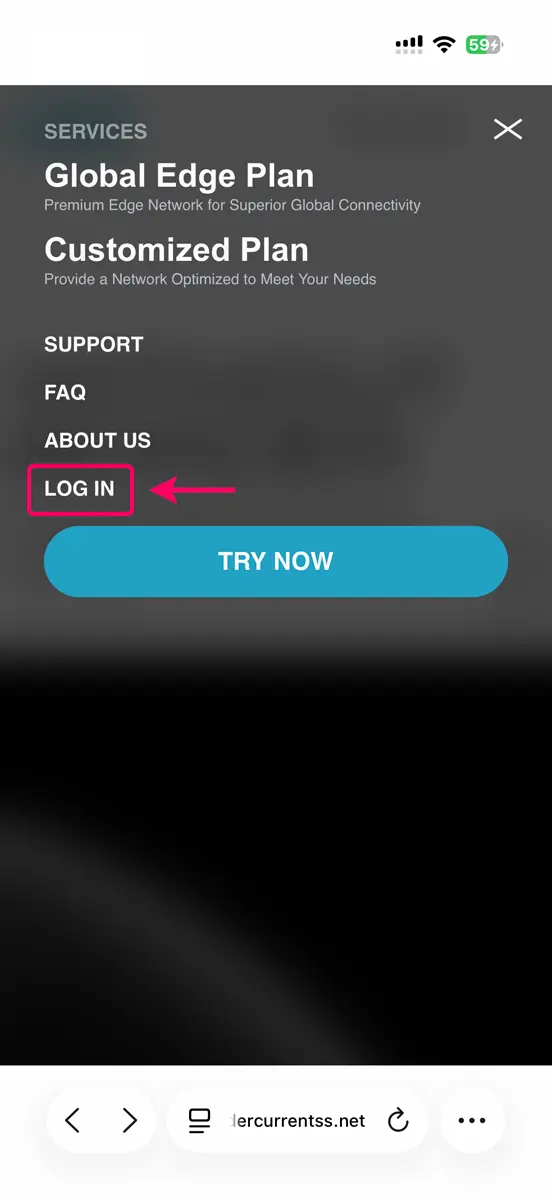
Tap “LOG IN” to access your account.
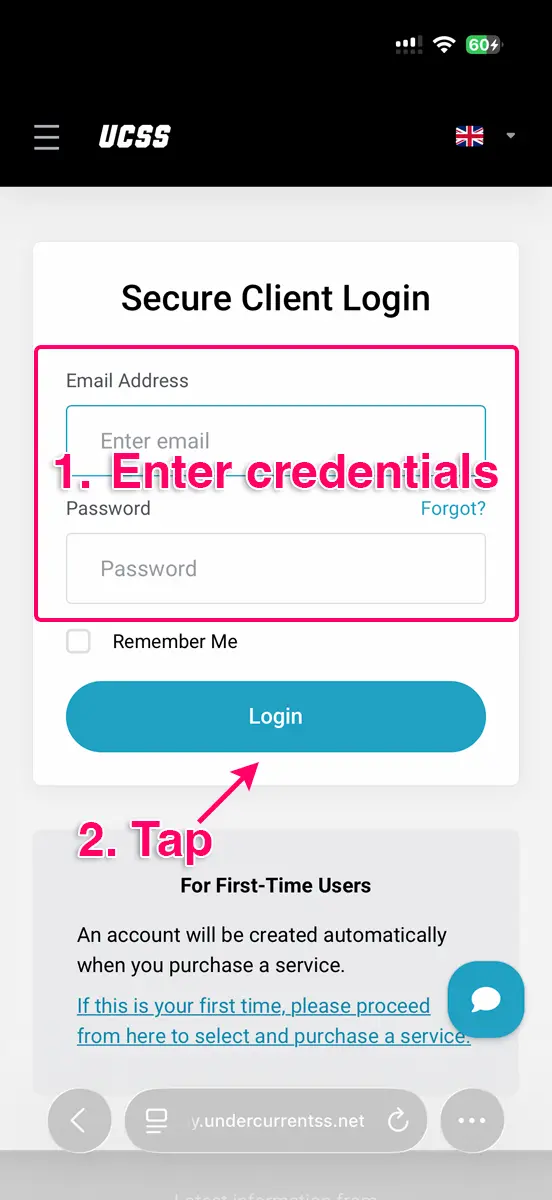
Log in as follows:
- Enter your email address and password.
- Tap “Login.”
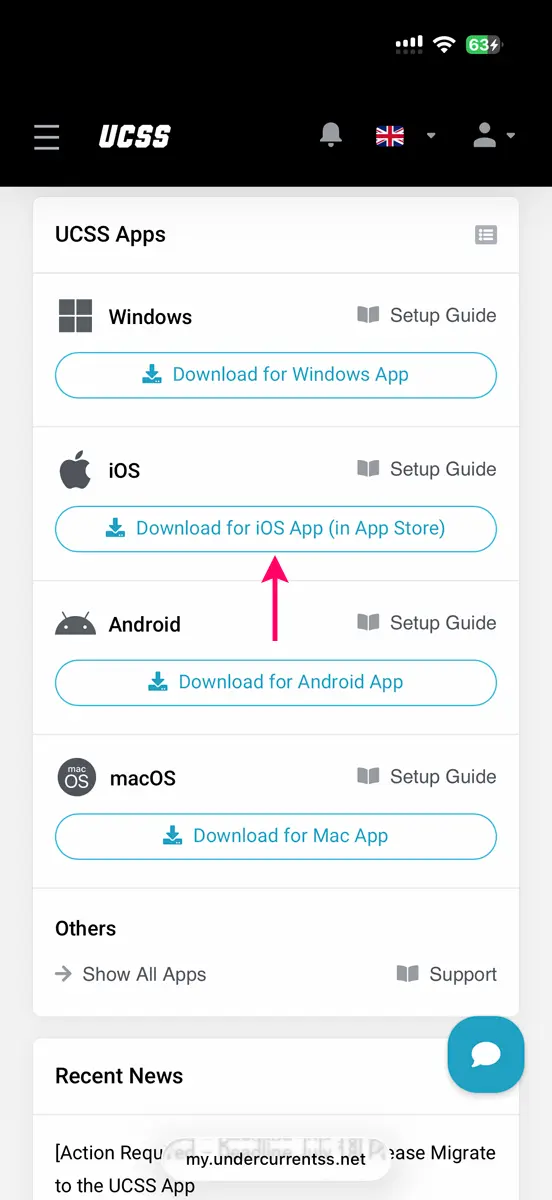
Once you're logged in, tap “Download for iOS App (in App Store).”
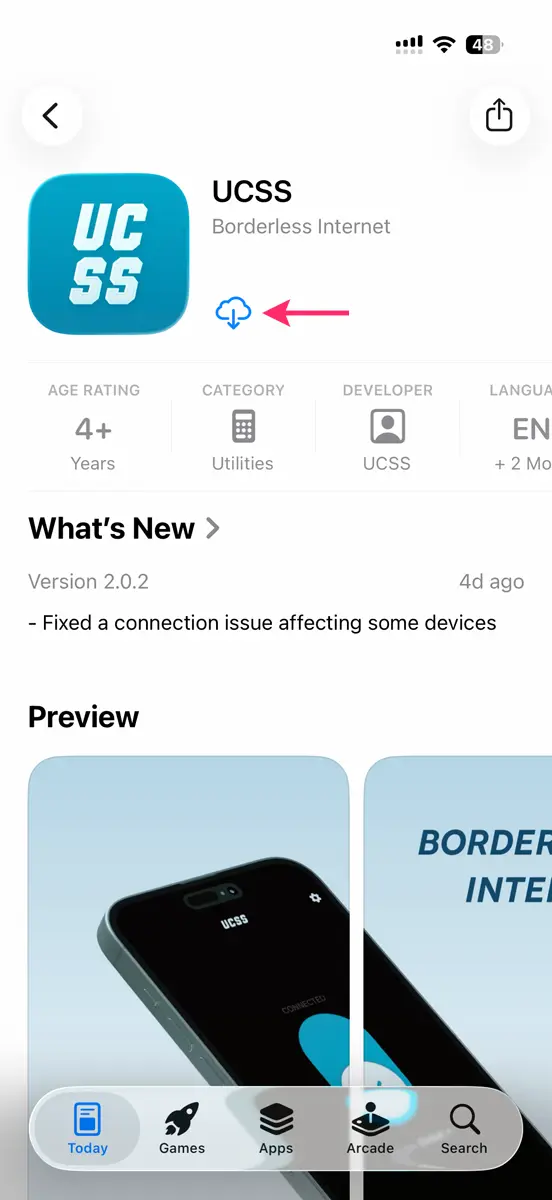
You'll be redirected to the App Store. Tap the download button to install the UCSS app on your iPhone or iPad.
Step 2: Open the UCSS App and Sign In
Once the app has been installed, open UCSS.
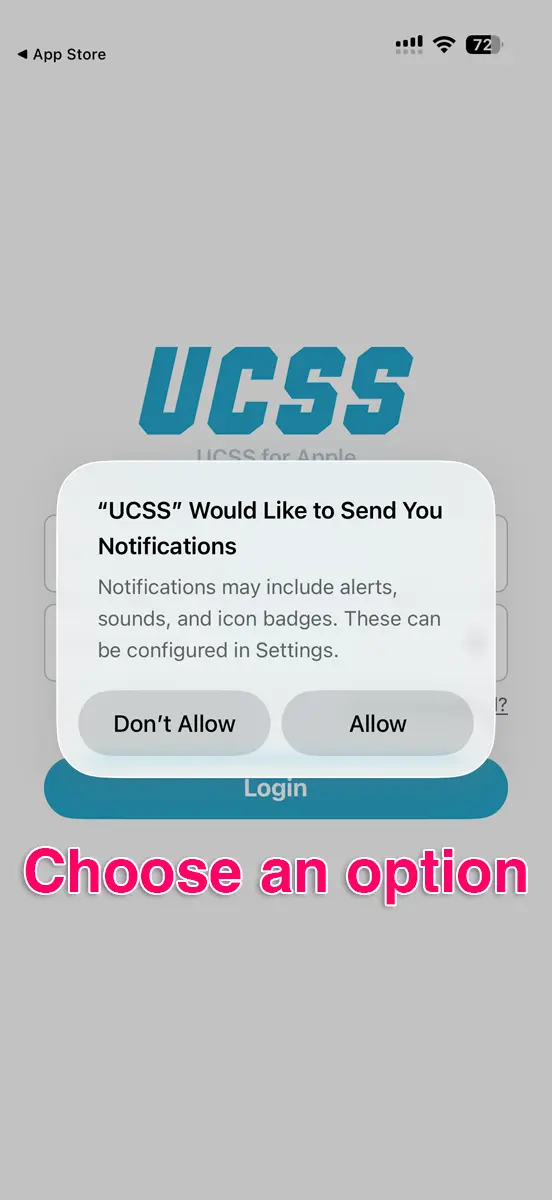
When you open the app for the first time, you may be asked whether you want to allow notifications from UCSS.
Choose “Allow” or “Don't Allow” based on your preference.
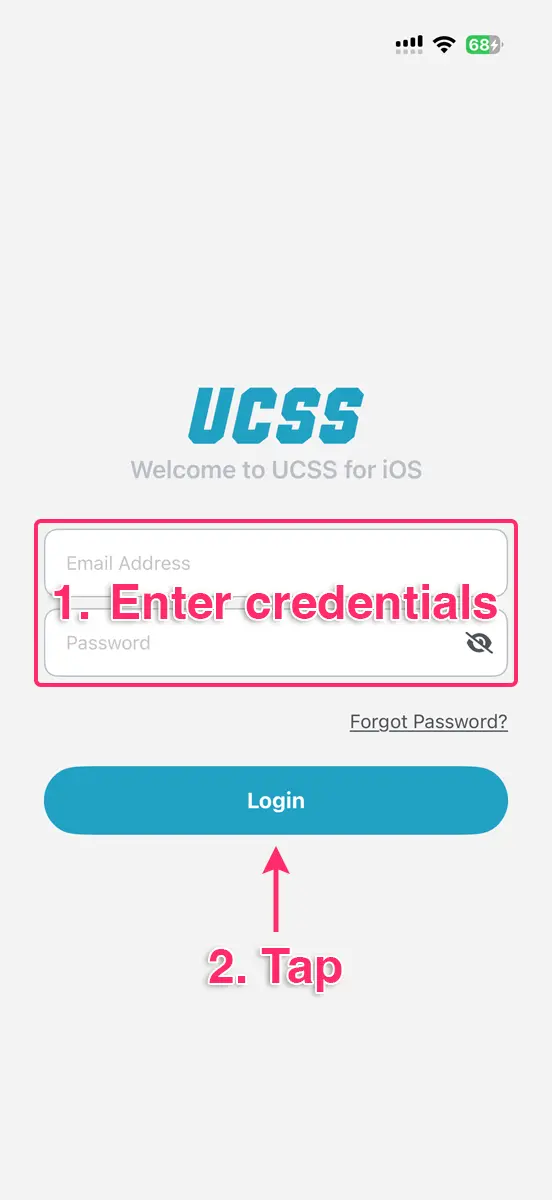
Log in to the app as follows:
- Enter your email address and password.
- Tap “Login.”
That's it—you should now be logged in to UCSS on your iPhone or iPad.
For the latest information about the UCSS app and download options, check the UCSS Official Website.
How to Use the UCSS VPN App on iPhone and iPad
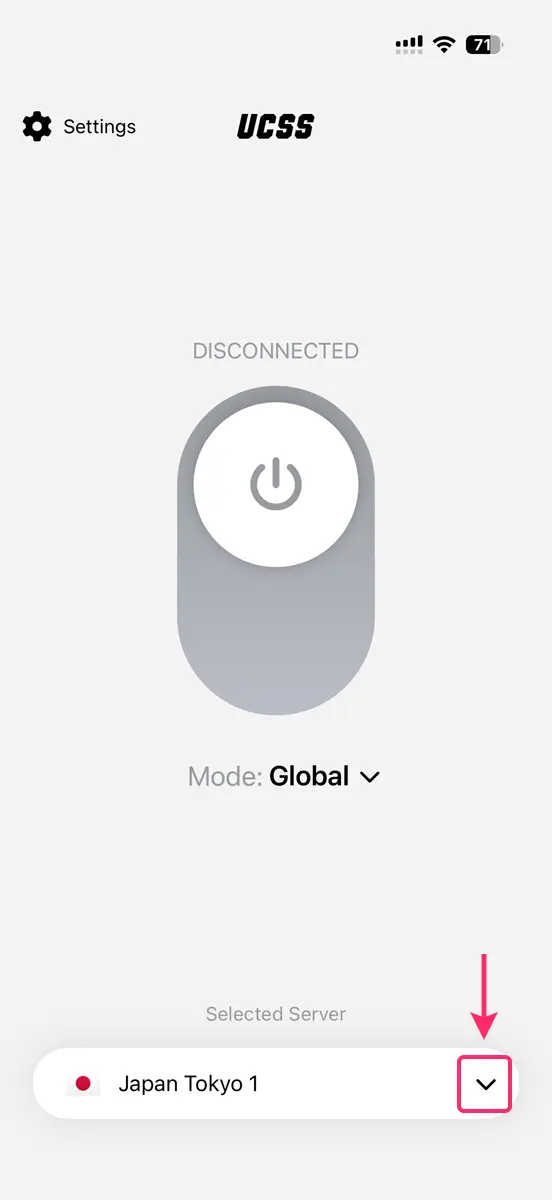
Once you're logged in, using the UCSS app is straightforward.
First, tap the server selection button in the bottom-right corner of the screen to choose the VPN server you want to connect to.
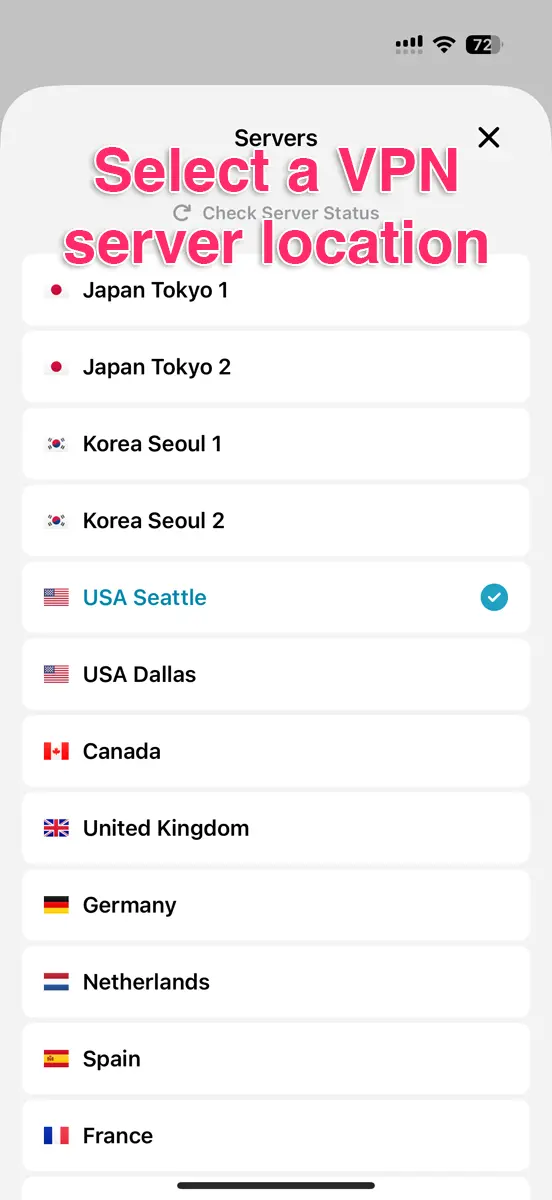
Choose a VPN server location based on the websites or services you want to access.
For example:
- Choose an Australian server for websites and services available in Australia.
- Choose a UK server for websites and services available in the UK.
- Choose a US server for websites and services available in the US.
How to Choose a UCSS Server
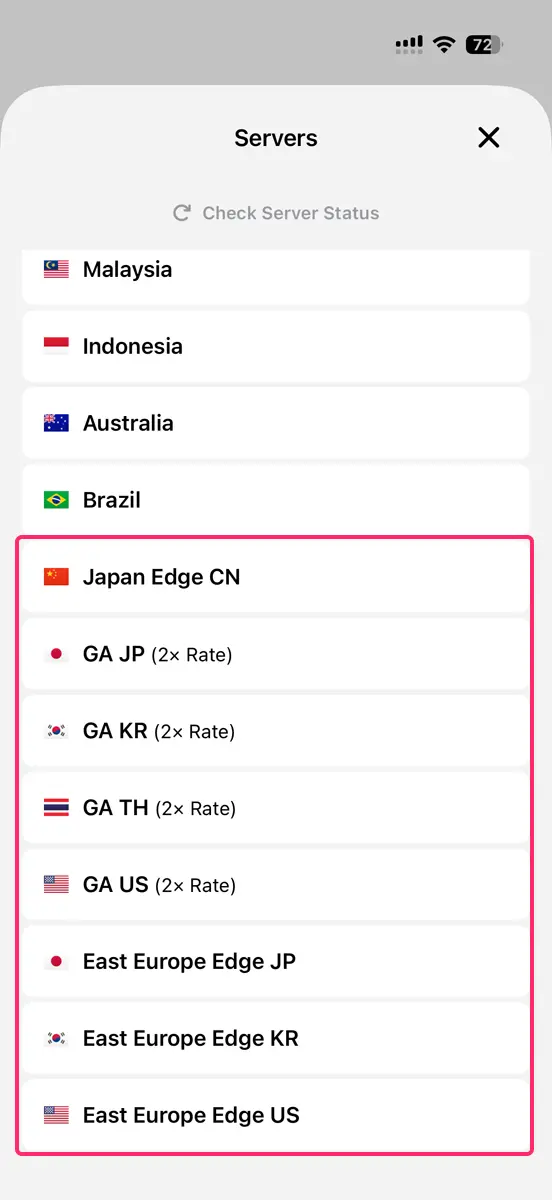
UCSS offers several types of servers, each optimized for different use cases.
- Japan Edge CN Server: Optimized for accessing Chinese services from outside mainland China.
- GA (2× Rate) Server: Designed for low-latency connections and reduced packet loss. These servers consume data at twice the normal rate, but their low ping makes them particularly useful for latency-sensitive activities such as online gaming. GA servers are one of UCSS's notable features.
- East Europe Edge Server: Optimized for connections from Russia and nearby regions.
The websites and services you can access may vary depending on the server you're connected to. Connection speeds can also vary depending on how busy each server is.
If you're unable to connect to a service or the connection feels slow, try switching to a different server.
How to Choose a UCSS Connection Mode
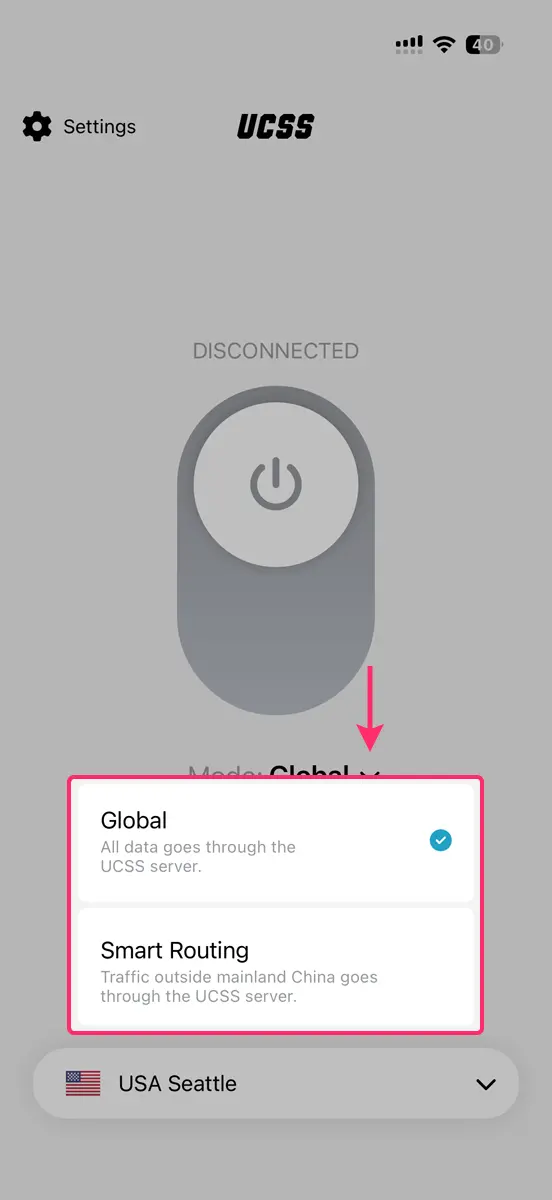
The best UCSS connection mode depends on how you use the service.
- Global: Suitable for Global plan users, as well as those who use UCSS for gaming or prefer to route all of their traffic through UCSS servers. This mode can be used both inside and outside China.
- Smart Routing: Designed for users in China who also need access to Chinese apps and services. Traffic to non-Chinese IP addresses is routed through UCSS servers, while traffic to Chinese IP addresses is handled separately.
If routing all of your traffic through UCSS isn't a priority, choose the mode that best fits how you use the service.
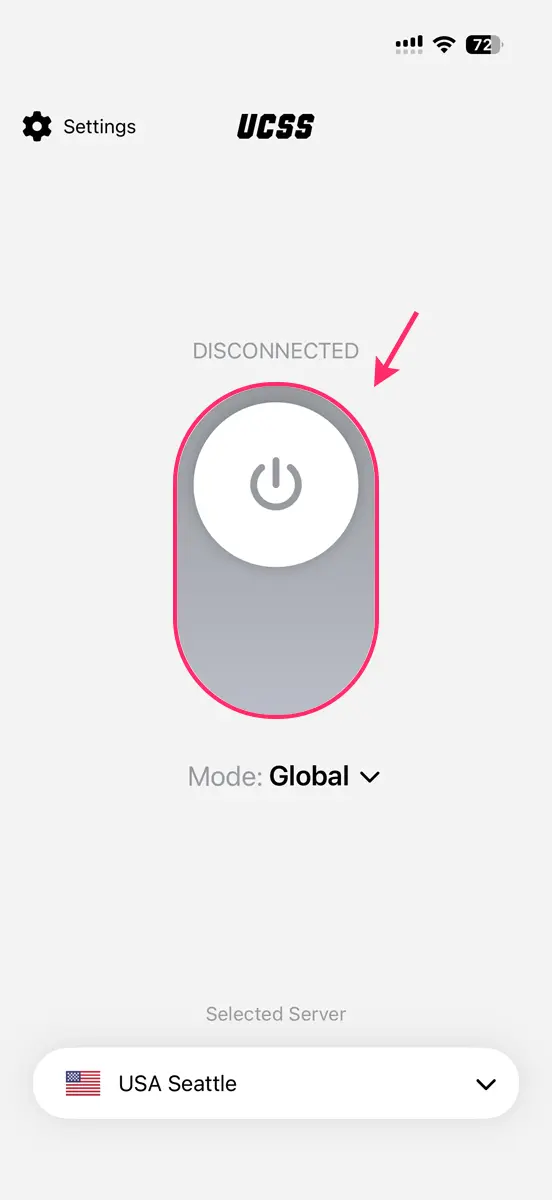
Tap the large button in the center of the screen to connect to the VPN.
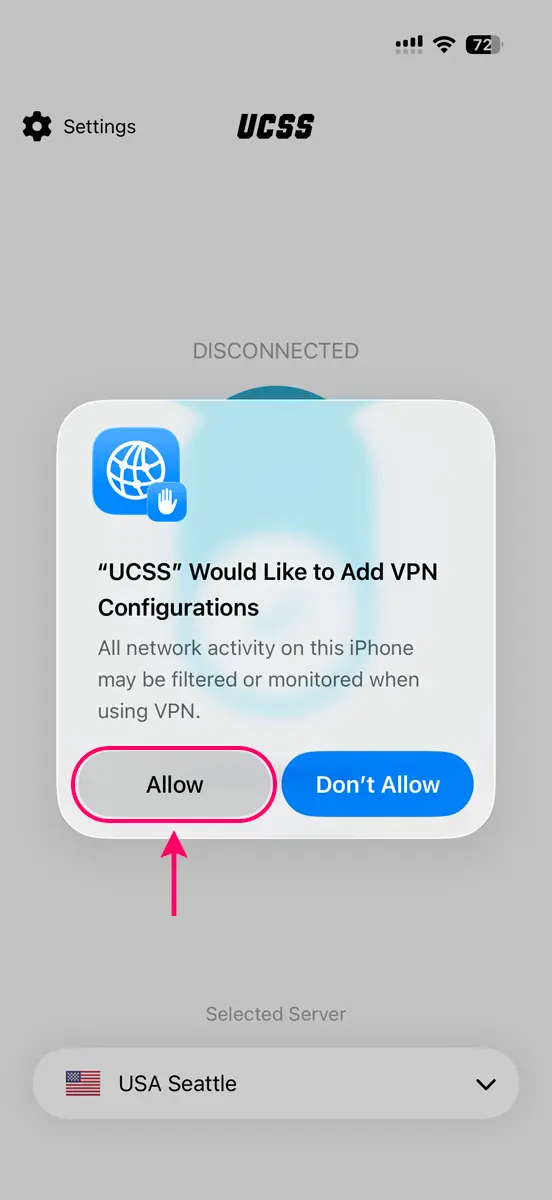
The first time you connect, your iPhone or iPad will ask for permission to add a VPN configuration.
Tap “Allow” to continue.
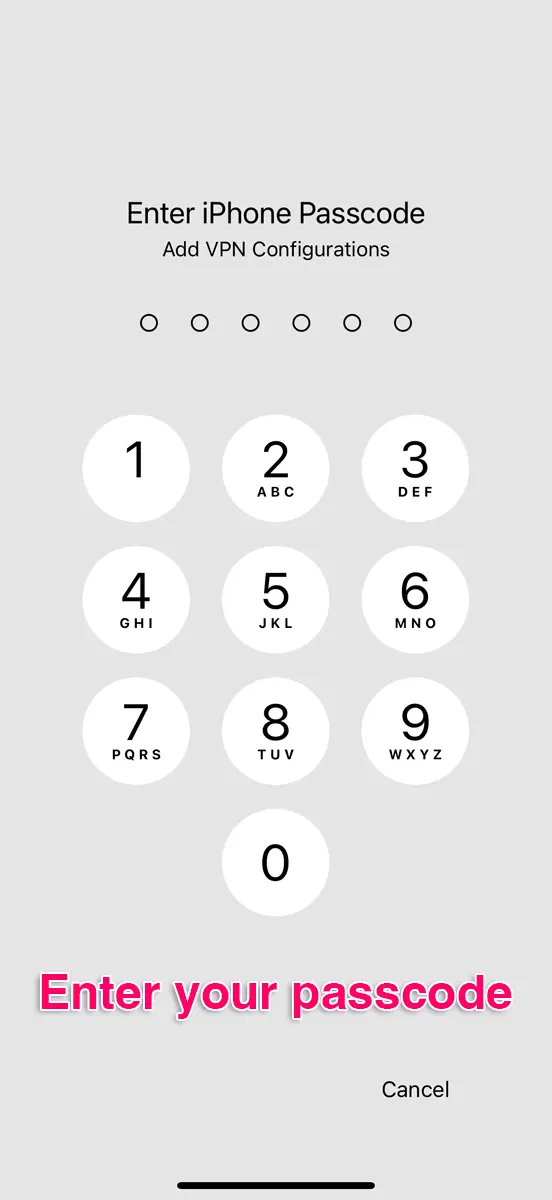
Enter your device passcode when prompted.
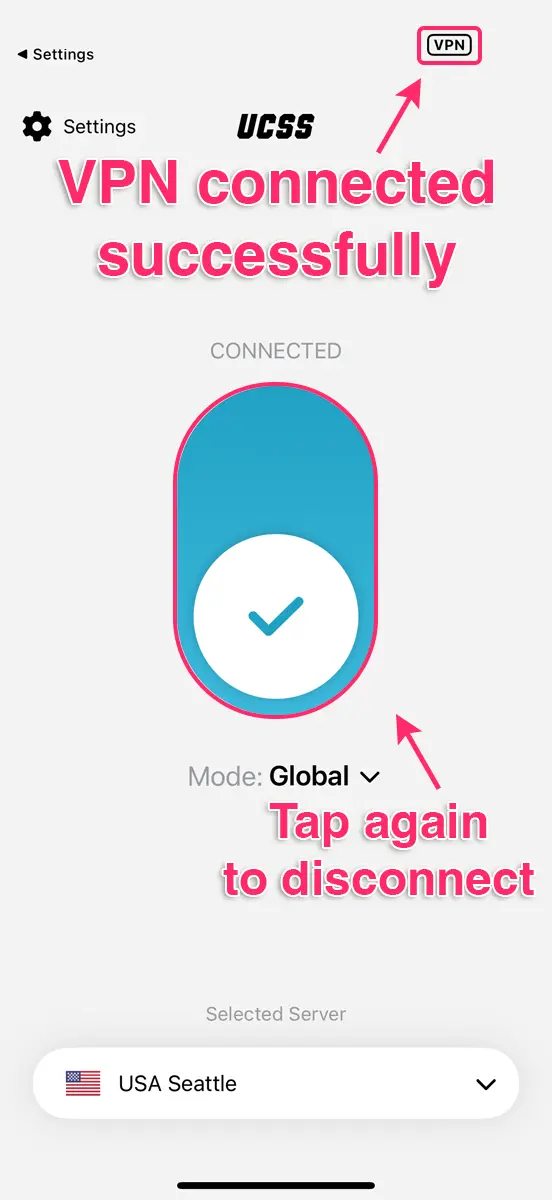
Once the app shows “CONNECTED,” the VPN connection is active and ready to use.
While you're connected, you may see a VPN indicator on your device.
To disconnect from UCSS, tap the button in the center of the app again.
Using a VPN can sometimes reduce your internet speed because your traffic has to pass through an additional VPN server. If you don't need the VPN, you can disconnect and reconnect whenever necessary.
Haven't Signed Up for UCSS Yet?
- UCSS Official Website
- How to Sign Up for UCSS VPN: Registration and Setup Guide
- UCSS Review | Performance, Speed, and Test Results
UCSS Setup Guides
- How to Set Up UCSS on Windows | Step-by-Step Guide
- How to Set Up UCSS on Mac | Step-by-Step Guide
- How to Set Up UCSS on Android | Step-by-Step Guide
- How to Set Up UCSS on iPhone and iPad | Step-by-Step Guide
